ACT Score Predictor
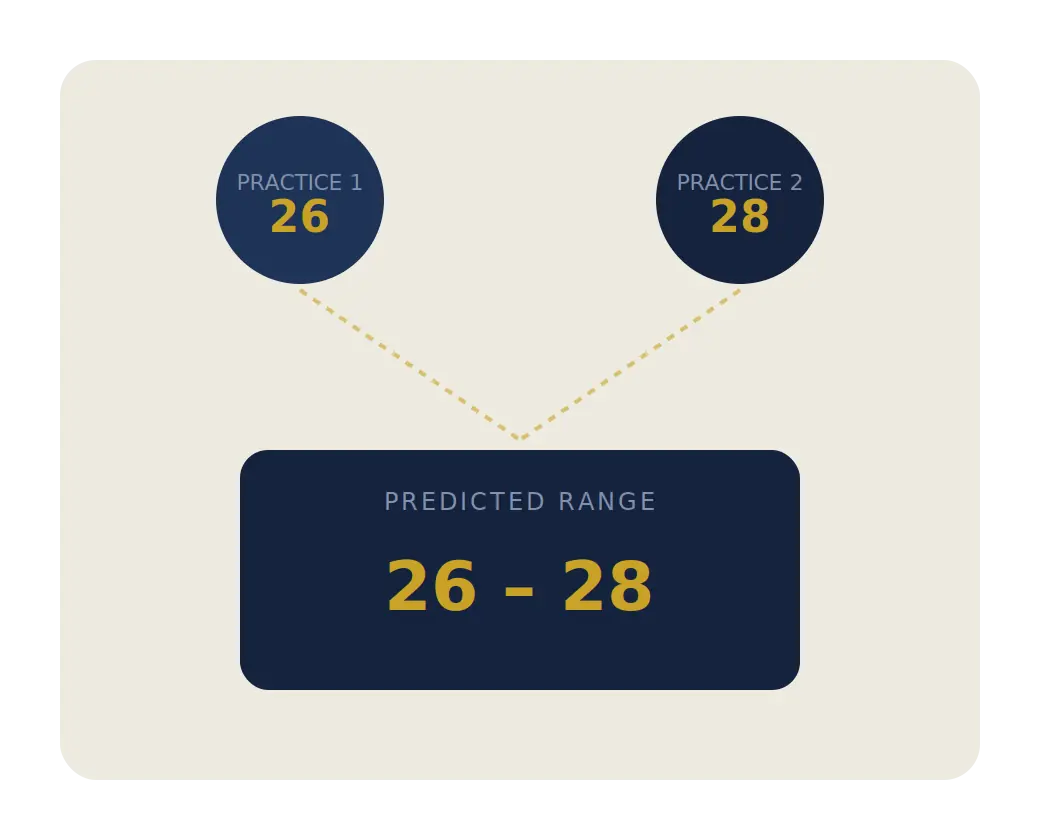
Enter your two most recent practice test scores and this ACT score predictor gives you a realistic range for your real composite, not just a single guessed number.
This ACT score predictor is only as good as the practice tests behind it. Use recent, timed, official-style practice tests for the most realistic prediction.
How This ACT Score Predictor Works
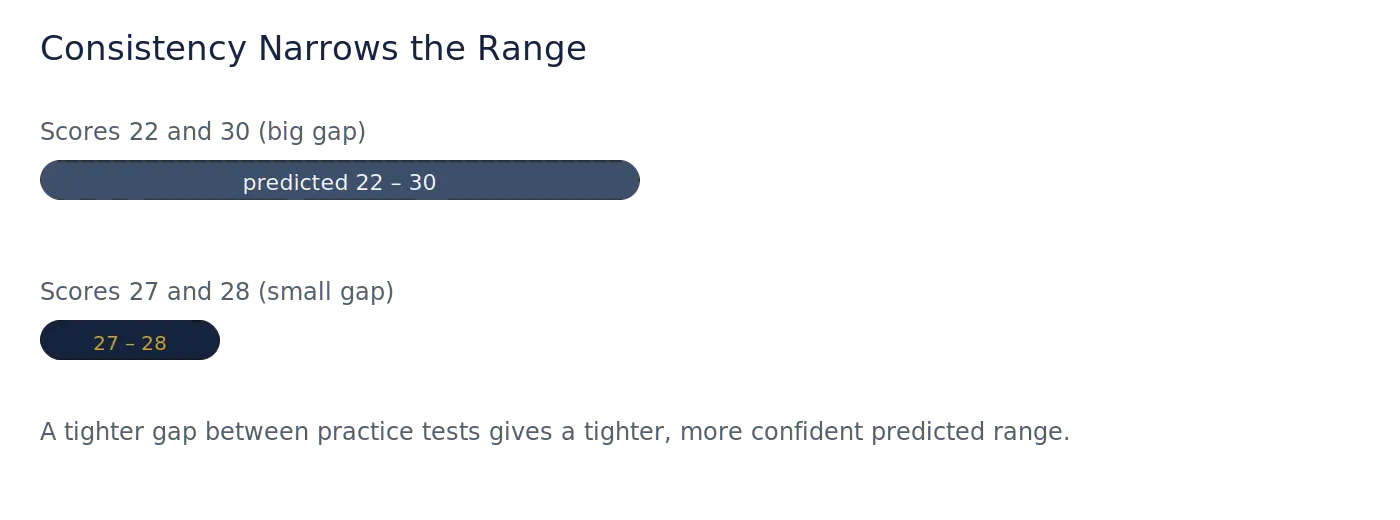
Most tools calling themselves an ACT score predictor just average two numbers and stop there, which quietly hides how reliable that average actually is. This one looks at both your most recent practice score and the one before it, then checks how far apart they are. If your two scores are close together, the predicted range stays tight, since consistent performance is a reasonably good sign of where your real score will land. If the two scores are far apart, the range widens, because that gap usually means your performance is still settling and one exact number would be misleading.
The math itself is simple: it averages your two practice scores to find the center point, then sets the range based on the size of the gap between them. A three or four point spread produces a noticeably wider predicted range than a one point spread, which is exactly how a careful predictor should behave.
Why the Range Matters More Than a Single Number
A lot of students want one clean number from a tool like this, but a single number can be more misleading than helpful. Real ACT scores move around test to test, even for students who feel equally prepared each time, simply because of small differences in focus, timing, and which specific questions show up on a given form. A predicted range is honest about that natural wobble instead of pretending to know an exact outcome weeks in advance.
Think of the range as a planning tool rather than a promise. If your range sits at 25 to 27 and your target school needs a 26, you're in reasonable shape, but there's still real work to do to make sure you land on the higher end rather than the lower one.
Taken the real ACT more than once already?
If you have official scores from two real test dates, use the superscore calculator instead of a prediction.
Getting a Prediction You Can Actually Trust
This kind of prediction is only as good as what you feed it. Timed, full-length, official-style practice tests give the most trustworthy input, since they follow the same section lengths and time limits as the real exam. A practice test taken untimed, split across several days, or pulled from an unofficial source with its own made up scoring curve will throw off any prediction, no matter how good the tool behind it is.
A Few Tips for Better Practice Test Data
Take your practice tests in one sitting, under real time pressure, ideally in the morning if that's when your actual test is scheduled. Space them out by at least a week or two so each one reflects genuine progress rather than just familiarity with the same questions. And keep checking your range after each new practice test, since it should naturally tighten as your scores become more consistent closer to test day.
Common Questions
How accurate is an ACT score predictor?
It's only as accurate as the practice tests you put into it. A predictor built from timed, official-style practice tests taken recently gives a reasonable range, while one built from an old or untimed test is a rougher guess.
Why does the predicted range get wider if my practice scores are far apart?
A big gap between two practice scores usually means your performance is still inconsistent, so the predictor widens the range instead of pretending to know an exact number it can't confidently support.
Should I use official practice tests or a random one I found online?
Official practice tests are curved the same way the real exam is, which makes any prediction more reliable. Unofficial tests can be scored on a made up curve that doesn't match the actual exam, which throws off the prediction.
Can this predictor tell me my exact score on test day?
No, and it isn't trying to. Test day includes real factors a predictor can't see, like nerves, sleep, and a different room, so this gives a realistic range rather than a guaranteed exact number.
Where to Go From Here
If you've already taken the real ACT more than once, an ACT score predictor isn't really what you need anymore, since you have actual results instead of practice estimates. Head to the ACT superscore calculator to see what your best section scores across those real test dates add up to, or use the ACT score calculator to check the composite from any single test date.